

Direct Answer: What Is Employee Provident Fund (EPF)?
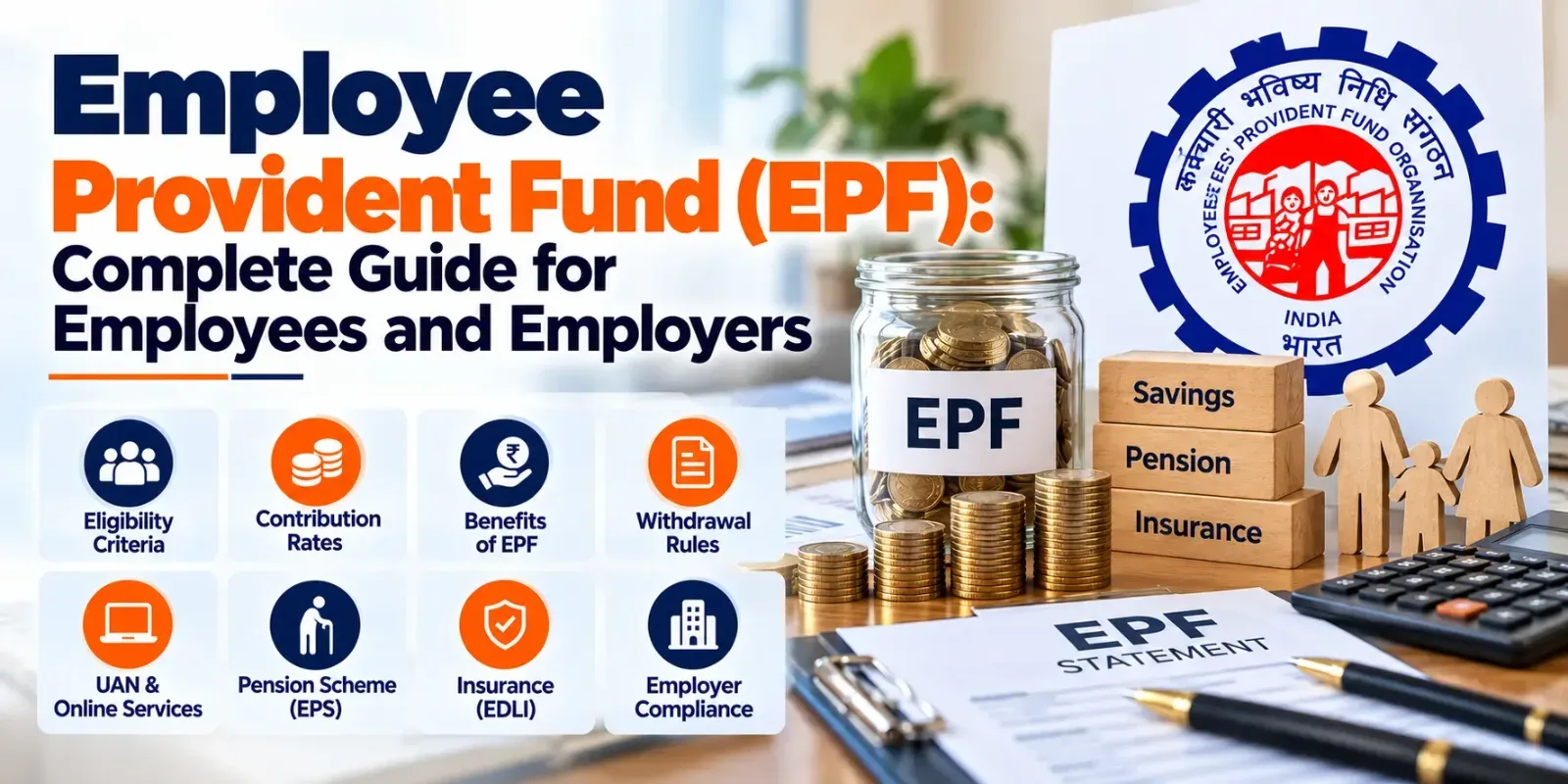
The Employee Provident Fund (EPF) is a government-backed retirement savings scheme, administered by Employees’ Provident Fund Organization (EPFO) in India. The employees and their employers make contributions to the provident fund accounts of the eligible employees, which contribute to the growth of long-term savings. Further, the EPF framework provides pension and insurance benefits under related schemes, as per the applicable eligibility and contribution norms.
Quick Summary of Employee Provident Fund (EPF)
Full form: Employees' Provident Fund.
Governing framework: Employees' Provident Funds and Miscellaneous Provisions Act, 1952, and applicable schemes and rules.
Administering authority: Employees' Provident Fund Organisation (EPFO).
Main purpose: Retirement savings and social security for eligible employees.
Associated schemes: Employees' Provident Fund Scheme (EPF), Employees' Pension Scheme (EPS) and Employees' Deposit Linked Insurance Scheme (EDLI).
Contribution structure: Employee and employer contributions are generally calculated as a percentage of eligible wages, subject to applicable rules.
Common contribution rate: 12% for the employee and generally 12% for the employer, with specified exceptions.
Wage ceiling update: The statutory wage ceiling for mandatory EPFO coverage was increased from ₹15,000 to ₹25,000 per month, effective 17 September 2026, according to the Ministry of Labour and Employment. Eligibility and contribution treatment depend on the applicable rules.
UAN: The Universal Account Number helps members access and manage their EPF records.
Withdrawal: Full settlement and partial advances are subject to specific conditions.
Employer responsibility: Eligible establishments must meet applicable registration, contribution, reporting and recordkeeping requirements.
Official resource: Visit the Employees' Provident Fund Organisation (EPFO) for member services, employer services, schemes and official updates.
What Is Employee Provident Fund (EPF)?
The Employee Provident Fund (EPF) is a contributory savings scheme that provides financial help to employees on retirement and on certain permitted circumstances.
The scheme is run by the Ministry of Labor and Employment's EPFO. Eligible employees are credited with contributions and interest, if any, on their provident fund accounts.
The EPFO framework includes three major schemes:
Employees' Provident Fund Scheme, 1952: Provides provident fund savings and permitted withdrawals.
Employees' Pension Scheme, 1995: Provides pension benefits to eligible members and their families.
Employees' Deposit Linked Insurance Scheme, 1976: Provides specified insurance benefits in eligible cases involving the death of a covered employee.
These schemes have different eligibility, contribution and benefit rules. EPF savings should not be confused with pension benefits or insurance benefits because the calculation and claim procedures differ.
Employee Provident Fund Eligibility Criteria
EPF coverage depends on the establishment, employee's membership history, eligible wages and applicable legal provisions.
1 Establishment Eligibility
The EPF Act applies generally to establishments falling under the relevant statutory categories and employing the prescribed number of employees. Under the traditional EPF regime, coverage generally applies to covered establishments with 20 or more employees.
Other applicable legal provisions or voluntary coverage may also apply to certain establishments.
Employers should verify their establishment category and current legal requirements instead of using just employee headcount as the sole indicator.
2 Employee Eligibility
Employees in covered establishments may be compelled to join EPF, in accordance with the relevant rules and conditions of membership.
An existing EPF membership can be important to an employee on changing jobs or when wages exceed the prescribed ceiling.
The Ministry of Labor and Employment said the statutory wage ceiling for mandatory coverage has been revised from ₹15,000 to ₹25,000 per month, effective 17 September 2026. Employers should verify the latest official notifications and implementation instructions to understand how the revision affects each individual employee.
3 Can Employees Earning Above the Wage Ceiling Join EPF?
The answer depends on the employee’s present membership, applicable provisions, details of wages and rules of the establishment.
EPF employees already generally have to consider continuity of membership when changing employers. New hires above the applicable statutory ceiling may be treated differently depending on the applicable provisions and their previous membership.
Employers need to check the membership history of the employee and the latest EPFO instructions before taking a call on how to enrolll them.
Employee Provident Fund Contribution Rates
EPF contributions are generally calculated as a percentage of eligible wages, subject to the applicable statutory provisions.
In the commonly applicable contribution structure:
The employee contributes 12%.
The employer generally contributes 12%.
A portion of the employer's contribution may be allocated to EPS for eligible employees.
Applicable EDLI and administrative charges may also be payable by the employer.
Certain establishments and categories may be subject to different contribution rates or specific rules. Employers should verify the current provisions before calculating payroll deductions.
Example of EPF Contributions
Assume an employee has eligible monthly wages of ₹20,000 and the standard 12% employee contribution applies.
Particulars | Calculation | Amount |
Employee contribution | ₹20,000 × 12% | ₹2,400 |
Employer contribution before allocation | ₹20,000 × 12% | ₹2,400 |
Combined contributions before employer-side allocation | ₹2,400 + ₹2,400 | ₹4,800 |
This is an example calculation. Actual contributions are based on the eligible wage components of the employee, the applicable wage ceiling, membership status and the rules in force.
The employer’s contribution may not be accounted for completely in the EPF balance since the contribution has to be allocated to EPS and other charges in connection with the scheme.
For official contribution information, consult the EPFO contribution-rate guidance.
Difference Between EPF, EPS and EDLI
Although EPF, EPS and EDLI operate within the broader EPFO framework, they provide different types of benefits.
Feature | EPF | EPS | EDLI |
Full form | Employees' Provident Fund | Employees' Pension Scheme | Employees' Deposit Linked Insurance |
Main purpose | Retirement savings | Pension benefits | Insurance benefit in eligible cases |
Main benefit | Accumulated balance and applicable interest | Pension subject to eligibility | Specified benefit following a covered member's death |
Employee contribution | Generally contributes under applicable EPF rules | No separate direct employee contribution under the standard arrangement | Funded through applicable employer-side arrangements |
Withdrawal or claim | Settlement and permitted advances | Pension or eligible withdrawal benefit | Claim by eligible nominee or beneficiary |
Key consideration | Account balance and service records | Pensionable service and applicable conditions | Membership and scheme conditions |
EPF members should review each scheme separately to understand their savings, pension entitlement and insurance coverage.
Benefits of Employee Provident Fund (EPF)
EPF provides several financial and social-security benefits to employees.
1 Retirement Savings
Regular contributions help employees build a retirement corpus over time. The accumulated amount can include employee contributions, employer contributions allocated to EPF and applicable interest.
2 Employer Contributions
Eligible employees receive the benefit of employer contributions under the applicable rules. This supports long-term savings beyond the amount deducted from the employee's wages.
3 Interest on EPF Savings
EPF balances earn interest at the rate declared or notified for the applicable period under the governing framework. The actual accumulation depends on contributions, withdrawals, interest rates and the duration of membership.
Employees should check their EPF passbooks and official announcements for current account information.
4 Pension Benefits
Eligible members may qualify for pension benefits under EPS, subject to service requirements, age conditions and other applicable rules.
The pension calculation is separate from the EPF account balance.
5 Insurance Protection
The EDLI scheme provides specified insurance benefits to eligible beneficiaries when a covered member dies, subject to the scheme's conditions.
6 Partial Withdrawals
Members may be permitted to withdraw part of their EPF savings for specified purposes, including certain medical, housing, education or marriage-related circumstances.
The permitted amount, qualifying service and documentation requirements depend on the applicable provisions.
7 Account Portability
The UAN helps employees maintain continuity of their EPF records when changing employers. Members should ensure that their personal details, KYC information and previous employment records are correctly maintained.
How to Check EPF Balance Online
Employees can check their EPF balance through official EPFO services.
Step 1: Activate Your UAN
Ensure that your Universal Account Number is activated and that you can access the relevant member services.
Step 2: Complete KYC Details
Verify that required personal details and bank information are correctly recorded. Aadhaar and other KYC requirements should be completed as applicable.
Step 3: Access the EPFO Member Portal
Visit the official EPFO website and navigate to the member services or passbook facility.
Step 4: Sign In
Use the credentials required by the official portal to access your account.
Step 5: Review Your Passbook
Check the available contribution records, employer entries and balance information.
Step 6: Report Discrepancies
If contributions are missing or details appear incorrect, contact your employer and use the official EPFO grievance mechanism where necessary.
Important: Portal procedures and authentication requirements can change. Follow the current instructions displayed on the official EPFO website.
How to Transfer or Withdraw EPF
EPF members may transfer their accumulated balance when changing jobs or claim eligible amounts under permitted withdrawal conditions.
1 EPF Transfer When Changing Jobs
Employees should give their existing UAN and related details to their new employer.
They have to verify if the earlier employment details and the new employment records are properly reflected in the EPFO system.
Transfer supports the continuity of provident fund records and may be relevant for evaluation of service benefits.
Transfer services and related forms information is available on official EPFO website. Form 13 is the traditional form for EPF transfers.
2 EPF Final Settlement
Members can apply for final settlement on fulfillment of the applicable conditions.”
Documents and forms depend on the nature of the claim, membership history and current procedure. In the past, Form 19 has been used for final EPF settlement.
3 Partial EPF Withdrawal
Withdrawals may be allowed on a partial basis for purposes under the relevant scheme provisions.
Members should review the qualifying conditions, allowable amount, service requirements and supporting documentation prior to applying.
4 Pension Claims
Pension benefits and withdrawal benefits under EPS follow separate rules. Form 10D has historically been used for eligible pension claims, while Form 10C has been used for specified withdrawal benefits and scheme certificates.
Important: Do not assume that every employee can withdraw the entire balance immediately after leaving a job. Withdrawal eligibility and tax consequences depend on the circumstances.
EPF Compliance Responsibilities for Employers
Employers must identify and fulfil the requirements applicable to their establishment.
1 Establishment Registration
Covered establishments should complete the applicable EPFO registration and maintain accurate establishment details.
2 Employee Enrolment
Employers should collect the required employee information, verify membership history and maintain correct UAN and payroll records.
3 Monthly Contributions
Employers must calculate contributions correctly and deposit them within the applicable statutory deadlines.
4 Electronic Challan-cum-Return
Employers should prepare and submit the applicable electronic contribution return and challan information through the prescribed system.
5 Recordkeeping
Maintain payroll registers, contribution records, employee details, payment acknowledgements and supporting documents.
6 Employee Communication
Employees should be able to understand their deductions, employer contributions and available account information.
7 Review Legal Updates
Employers must monitor changes to wage ceilings, contribution rules, filing procedures and other applicable requirements.
For current employer services, visit the EPFO Employer Portal.
Common EPF Mistakes to Avoid
Mistake 1: Using Outdated Wage-Ceiling Information
Employers should not rely on old guidance without checking current notifications. The statutory wage ceiling for mandatory coverage was revised to ₹25,000 per month effective 17 September 2026, according to the Ministry of Labour and Employment.
Mistake 2: Incorrect Employee Details
Differences in names, dates of birth, Aadhaar information or other personal details can delay transfers and claims.
Mistake 3: Failing to Update Employment Records
Employees should check that joining and exit details are correctly recorded when changing jobs.
Mistake 4: Ignoring Missing Contributions
Employees should regularly review their passbooks and raise discrepancies with the employer or EPFO.
Mistake 5: Withdrawing Without Checking Eligibility
Premature or partial withdrawals are subject to specific rules and may have tax implications. Members should review the applicable conditions before submitting claims.
Mistake 6: Incorrect Payroll Calculations
Employers should identify eligible wage components, applicable contribution rates and the correct allocation between EPF and EPS.
Mistake 7: Missing Compliance Deadlines
Late or incorrect contributions and returns may lead to interest, damages or other consequences under the applicable law.
Expert Advice from TaxCaller
At TaxCaller, we recommend that employers review their EPF compliance as part of their regular payroll and statutory compliance processes.
Businesses should maintain accurate employee records, check applicable wage ceilings, calculate contributions correctly and retain payment acknowledgements. Employers should also review the latest EPFO notifications before changing payroll settings.
Employees should activate their UAN, review their passbooks, verify KYC details and ensure that previous employment records are correctly maintained.
TaxCaller provides business compliance services that can support employers with related financial and statutory responsibilities:
Accounting and Bookkeeping Services: Assistance with accounting records and financial processes.
Company Registration Services: Support with business incorporation and related formalities.
GST Registration Services: Assistance with GST registration and compliance.
Income Tax Filing Services: Support with applicable income-tax return filing.
EPF applicability and contribution treatment depend on the establishment, employee membership and current statutory provisions. Employers should obtain professional advice where the correct treatment is uncertain.
Official Government References
Use these authoritative sources as external links within the published blog:
Employees' Provident Fund Organisation (EPFO) — Official portal for members, employers and EPF-related information.
EPFO: About EPFO and its schemes — Information about EPF, EPS, EDLI and claim forms.
EPFO: Present Rates of Contribution — Contribution-rate guidance, subject to verification against current notifications.
Ministry of Labour and Employment: Wage-ceiling revision announcement — Government announcement on the increase in the statutory wage ceiling to ₹25,000 per month.
EPFO Employer Portal — Employer login and relevant establishment services.
Conclusion:
The Employee Provident Fund (EPF) is an important retirement savings and social security scheme for eligible employees in India. It helps employees build long-term savings through regular contributions while providing access to associated pension and insurance benefits under the applicable EPFO schemes.
Employees should understand their EPF contribution rates, eligibility criteria, withdrawal rules, UAN details and account statements to manage their provident fund effectively. When changing jobs, they should ensure their employment records are updated and consider transferring their accumulated EPF balance to maintain continuity.
Employers must fulfil their applicable EPF responsibilities, including employee enrolment, accurate contribution calculations, timely deposits, recordkeeping and statutory reporting. They should also monitor changes in EPFO rules and official notifications to maintain compliance.
For businesses, maintaining accurate payroll and financial records is essential for managing statutory obligations efficiently. TaxCaller provides accounting and bookkeeping, company registration, GST registration and income-tax filing services to support businesses with their wider compliance requirements.